

How SMS Marketing for Tax Professionals Boosts Outreach
During tax preparation, even a small gap in communication can lead to slower turnaround and fewer booked appointments.
While most businesses use short message service (SMS) to stay connected with customers, tax firms have even more reason to use it during filing season.
The need for quick replies is higher, the workload is heavier, and clients want updates they can act on right away.
Texting is also quick to read, simple to answer, and much easier to manage than long email threads or repeated phone calls.
In this article, we will break down how SMS marketing for tax professionals helps you win more clients, keep current clients engaged, and stay active long after tax season ends.
TL;DR
- SMS marketing fits client behavior during tax season because it supports quick updates, reminders, follow-up, and easier replies.
- SMS can support many parts of your client cycle, including lead follow-up, consultation booking, appointment confirmations, appointment reminders, document requests, missing information follow-up, deadline alerts, extension updates, refund communication, review asks, referrals, and client reactivation.
- A strong SMS setup starts with spotting communication gaps, choosing the best SMS platform, building an opt-in system, segmenting contacts, creating message templates, setting up automated workflows, launching focused campaigns, and tracking your results.
- Textellent supports that full setup with tools for booking, reminders, segmentation, automation, scheduling, and year-round client follow-up, which makes it a strong fit for tax firms.
Why Texting Fits the Way Tax Clients Communicate
IRS filing data shows 140.6 million individual returns had been received as of April 18, 2025, and 72.5 million e-filed returns came from tax professionals.
They also logged 322.9 million visits to the official website during that same period, which shows how many people were searching for tax answers and refund updates.
That volume shows how many client conversations, reminders, status checks, and missing document follow-ups tax offices need to handle in a short span.
During tax season, clients are not looking for long updates or back-and-forth phone calls. Most are already checking their cell phones all day, so texting fits the way they already respond to service updates.
For a tax professional, text message marketing is a communication channel that helps keep client communication moving during the busiest part of the year.
SMS Marketing Use Cases for Tax Professionals
You can use SMS in many parts of the client cycle, from first contact to post-filing follow-up. Here are the main ways you can implement text messaging in your tax preparation business.
Lead Follow-Up Texts
Lead follow-up texts let your firm reply soon after someone fills out a form, calls your office, or asks about pricing. Fast communication helps keep interest high and moves the person toward a booked meeting.
Consultation Booking Messages
For new inquiries, booking texts make scheduling easier. A targeted message with time options or a booking link can turn more leads into scheduled consultations.
Appointment Reminder Texts
As tax season gets busy, automated appointment reminders help clients remember scheduled meetings. Sending one before the appointment helps reduce no-shows and keeps your calendar full.
Appointment Confirmation Texts
Appointment confirmation texts remind clients that their meeting is set. They also cut down on mix-ups because it supports two-way messaging when the client needs a new time.
Document Submission Reminders
Many returns slow down because clients have not sent the needed files. Document reminder texts let your firm request W-2s, 1099s, ID copies, expense records, or other forms without a lengthy email thread.
Missing Information Follow-Ups
Some returns get stuck over one small missing item. A follow-up text makes it easier to ask one simple question and get the reply needed to keep work moving.
Tax Deadline Reminder Campaigns
Deadline reminder campaigns keep filing reminder dates, payment due dates, and extension cutoffs in front of clients. Accounting firms can use them to prompt action before time runs out.
Extension Filing Updates
Extension updates keep clients informed when a return needs more time. A text can confirm the extension was filed, note what still needs attention, and remind the client about the next date.
Refund Status Communication
Refund status texts address one of the most common client questions after filing. Sending updates can cut down on repeated check-ins and save your office time.
Review Request Campaigns
Once a return is done, review request texts make it easier to ask satisfied clients for feedback. A message sent soon after service can bring in more public reviews for your firm.
Referral Request Messages
Referral text messages turn satisfied clients into a source of new business. Asking at the right point can lead to more word-of-mouth referrals from people who already trust your firm.
Cross-Sell Messages
Cross-sell messages are useful for firms that also offer bookkeeping, payroll, tax planning, or business filing support. A well-placed text can introduce another service that fits the client’s needs.
Re-Engagement Campaigns
Some leads ask about service but never book. Some past clients stop replying. Re-engagement campaigns give your firm a way to reopen those conversations and bring some of those contacts back.
Annual Client Reactivation Campaigns
Before tax season starts, reactivation campaigns remind past clients that it is time to book again. Reaching out early can fill your calendar before the rush picks up.
Internal Team Notifications
Internal alerts help your staff move faster on new leads, urgent replies, or client issues. For example, a text alert can let the right person know that a new inquiry came in or that a client needs follow-up.
How to Get Started With SMS Marketing
Here’s how to build an SMS marketing system that supports quick replies, easy outreach, and better communication with clients.
Step #1: Spot Client Communication Gaps
Start with the parts of your client process where replies slow down, or important updates get missed.
For many tax preparers, those weak spots show up in lead follow-up, appointment reminders, document requests, unsigned forms, and last-minute important deadline reminders.
You may look at where staff sends the same message repeatedly and where tax returns sit still because one update never reached the client.
Once you know where communication breaks down, it becomes much easier to choose the first use cases that will support your work during the upcoming tax season.
Step #2: Choose the Best SMS Platform
Your SMS platform should support the full client cycle, from first inquiry to post-season follow-up. Textellent is built with accounting and tax services in mind.
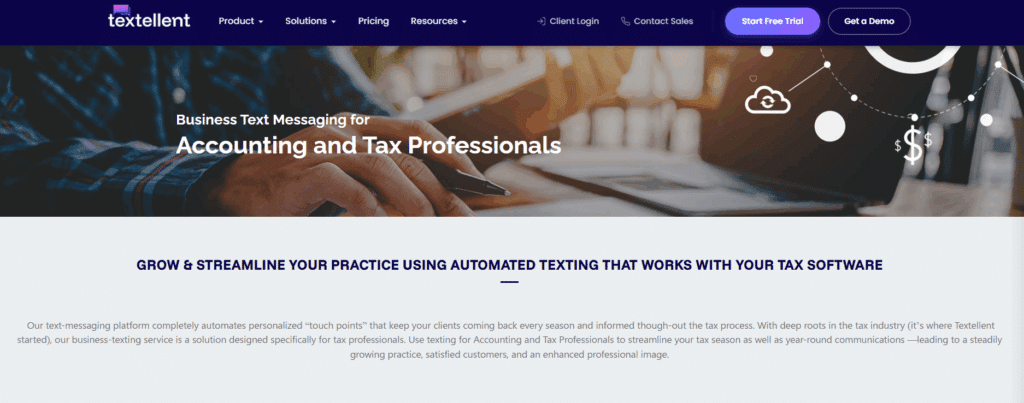
What sets Textellent apart from other platforms is how closely it connects texting with your systems and normal tax processes.
Instead of using one tool for client messages and another for tax work, you can tie outreach to the timing and status inside your practice management software.
Textellent also helps your firm handle one of the biggest tax-season problems, which is keeping up with appointments, follow-up, and status updates.
Clients can book from open calendar slots, choose a staff member, get confirmations, receive text reminders, and get a reschedule prompt after a missed appointment.
Finally, Textellent is useful beyond filing season. You can use text marketing for tax tips, referral asks, repeat follow-up, and seasonal promotions for existing clients year-round.
That makes it the best business texting platform to boost your tax season marketing strategy. Sign up for a free trial or request a demo consultation with Textellent today!
Step #3: Build Your Opt-In Process
Before you send any marketing text, you need permission from the client or lead. That starts with an SMS opt-in process.
Under the Telephone Consumer Protection Act (TCPA), marketing texts sent require prior express written consent.
People should also know what they are signing up for, what type of messages they will get, and how to stop promotional messages at any time.
You can add an express consent to your website forms, consultation request forms, tax appointment booking pages, and client intake forms. You may also collect opt-ins in person if your office uses paper forms or front-desk signups.
Let people know they are agreeing to get text messages from your firm, and explain what those texts may include, such as marketing messages tied to your tax preparation services.
You should also include a notice that message and data rates may apply, along with opt-out instructions like STOP to unsubscribe.
Step #4: Import and Segment Contacts
A disorganized contact list can lead to weak targeting, poor timing, and messages that do not match what a client needs.
During tax season, one list is not enough. New leads and last year’s clients all need different messages.
Textellent lets you sort contacts with tags tied to tax-season needs. SMS segmentation allows you to tag people based on where they came from, such as a website form, a text keyword, or a paid ad.
You can also tag contacts as new leads, repeat clients, business tax clients, extension clients, missing paperwork clients, or review-request-ready.
Textellent also makes it easier to keep contact data in sync with the systems your office already uses. When your tags reflect actual client needs, you can send more useful texts and reach clients with better timing.
Step #5: Create Templates for Common Tax Messages
Message templates keep wording consistent and help your staff reply faster when the phone, inbox, and client list all get busy during tax filing.
You need to identify the messages your financial firm sends every week. This includes lead follow-up, consultation booking, appointment reminders, document requests, payment reminders, or missing information follow-ups.
Each message should ask for one thing only. One text can ask a client to book a meeting, while another can ask for a W-2, a 1099, or a signed form.
Before tax season picks up, read every template and check the wording, links, dates, and calls to action. Make sure each one sounds like your firm and fits the stage the client is in.
Step #6: Build Automated Workflows
Tax season brings the same pressure points again and again. SMS automation turns those repeat moments into planned message paths.
A good workflow should match the client’s tax-season timeline. Someone who just opted in should not get the same message path as a past client who filed with your firm last March.
Textellent supports SMS drip campaigns, so you can send automated messages based on when a tag was added or when a person joined your list.
That opens the door to follow-up tied to booking dates, past filing dates, extension deadlines, or document request timing.
Step #7: Launch Your First Campaign
A smaller, focused SMS campaign is easier to manage and gives you a better view of what kind of message gets replies during tax season.
Each campaign should ask the client to do one thing. That can be booking a consultation, sending missing forms, confirming an upcoming appointment, or uploading documents.
SMS scheduling is a big part of launching a strong campaign. Instead of sending SMS messages as soon as they are written, your firm can set campaigns to go out at the proper time.
That kind of planning helps you stay ahead instead of rushing messages out at the last minute.
Step #8: Track Results and Improve
Sending texts is only one part of SMS marketing. You also need to see which messages get replies, which campaigns bring in bookings, and which contact groups stay inactive.
You have to look at reply rates, booked consultations, review requests completed, and opt-outs. Those numbers show which campaigns support your goals and which ones need work.
When a campaign underperforms, do not change everything at once. Test one part first, such as the opening line, call to action, send time, or contact group.
Tax season has its own rhythm. Some messages get better responses early in the season, while others do better close to filing deadlines.
You need to keep an eye on patterns tied to booking windows, extension periods, and post-filing follow-up so your firm can adjust future campaigns with better timing.
Stay Connected With Clients During Tax Season With Textellent
If you want a better way to streamline communication with clients, texting can turn slow reply cycles into faster action.
Textellent also helps your firm create a smoother client process from the first inquiry to post-season follow-up. You can send appointment reminders, document requests, review asks, and year-round check-ins without adding more phone work to the day.
That kind of contact can support stronger client relationships and keep more clients coming back each tax season.

If you want to grow beyond filing work, sign up for a free trial or request a demo consultation with Textellent today!
FAQs About SMS Marketing for Tax Professionals
How often should tax professionals text clients?
You should text clients when there is a real reason to reach out. Good examples include appointment reminders, document requests, deadline notices, and follow-up tied to tax law changes.
Can tax professionals send bulk text messages?
Yes, tax professionals can send bulk text messages if the contact has permitted to receive them.
Bulk SMS works best for deadline reminders, seasonal updates, and text promotions tied to your services. Each message should share relevant information and a simple next step.
Can SMS marketing work for small tax firms?
Yes, SMS marketing can work very well for a small marketing tax services. It’s a practical option for reminders, status updates, payment prompts, and messages that guide clients to a secure portal or document workflow.
Can SMS marketing support client retention after tax season?
Yes, SMS marketing can support client retention after tax season. Your tax practice can use it for review requests, referral asks, tax tips, and reminders tied to planning or filing dates.
A secure client portal can also support follow-up when clients need a safe way to check updates or send files linked to tax law topics.

Get Started with Business Texting
Simple to launch, built to scale. Try Textellent FREE for 14 Days
Start Free Trial