
10 Best Postscript Alternatives for Sales-Driven SMS Campaigns
Postscript is a popular SMS marketing tool for online retailers. But many businesses find it mostly focused on ecommerce and not quite as flexible for scheduling, customer service, or team messaging.
These limitations can leave you struggling to keep up with customers or trying to manage all your texting in separate places.
You may need stronger SMS automation, better ways to connect with your customer relationship management (CRM) system or scheduling tools, or more control over how conversations are organized.
As your business grows, the right platform for texting should handle reminders, customer support, and operational updates, not just marketing campaigns.
Below, we explore ten of the best Postscript alternatives, highlighting each platform’s SMS capabilities and discovering some potential drawbacks reported by other businesses.
TL;DR
These ten alternatives to Postscript offer a more intuitive setup and innovative features designed to support your sales team’s workflows.
- Textellent
- Klaviyo
- Attentive
- Omnisend
- Yotpo
- Emotive
- Twilio
- SimpleTexting
- Braze
- Sinch
1. Textellent
If you’re looking for a Postscript alternative that brings SMS beyond just marketing blasts, Textellent is built for reliable, two-way texting.
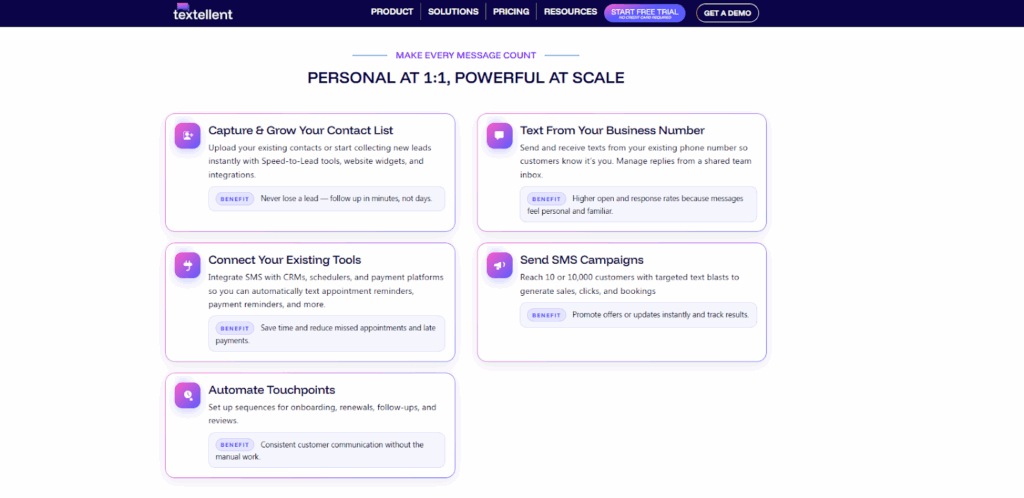
This text marketing platform lets you handle customer conversations, automate routine messages, and make sure every text comes from your recognizable business number.
Here’s what makes Textellent stand out for your business texting needs:
- Two‑way SMS with a shared team inbox that keeps conversations organized and visible for different teams
- Send and receive SMS using your existing business phone number, so customers recognize and trust the sender
- Bulk messaging campaigns for reaching groups of contacts from a single interface
- Automated text triggers based on events to boost conversion rates and lifetime value
- SMS scheduling for one‑time or recurring messages to support reminders, follow‑ups, and updates
- Audience segmentation and tagging to support targeted outreach
- Integrations with CRMs, scheduling tools, ecommerce platforms, and other business systems
- SMS API access for custom workflows and deeper system connections
- Built‑in opt‑out handling and SMS compliance support for managing consent
- Message delivery status tracking and contact list controls
- Multimedia messaging service (MMS) support for images, files, and other content
- Mobile and desktop access so your team can manage conversations from anywhere
How Textellent Differs From Postscript
What sets Textellent apart is its broader approach to messaging. Postscript’s feature set is optimized for ecommerce triggers and list growth within an online store context.
Textellent expands on that by supporting messaging triggered by real operational events like appointments, payments, scheduling reminders, and customer service interactions.
This intuitive platform focuses on practical messaging that fits operational and customer engagement needs that go beyond commerce use cases. You can also take advantage of a free plan to try out the basics before upgrading to its flexible pricing plans.
Textellent supports your business in creating consistent and compliant SMS communications. Sign up for a free trial or request a demo consultation today!
2. Klaviyo
Klaviyo is an omnichannel marketing platform that connects email and SMS campaigns. You can deliver personalized messages using customer profiles built from detailed data.
The platform makes it possible to trigger automated drip campaigns that send a text if an email goes unopened or trigger automated messages based on specific customer actions.
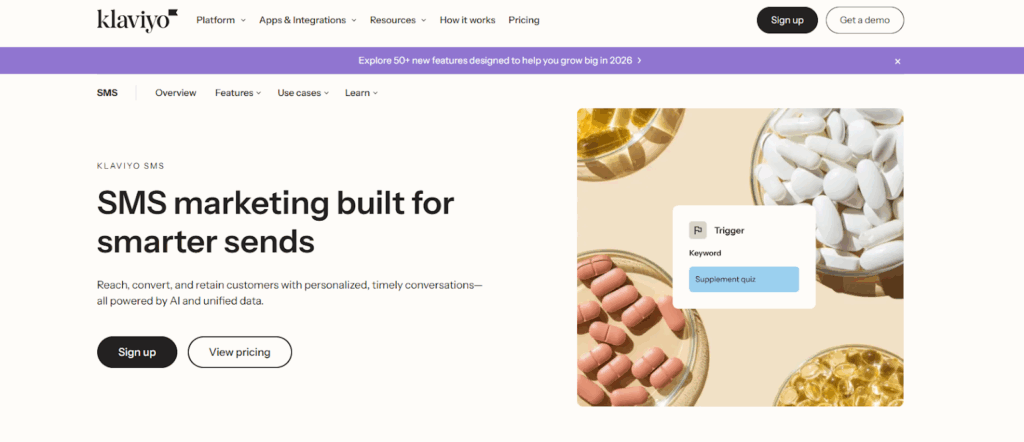
Image Source: klaviyo.com
Klaviyo provides key features for customer segmentation, automation, and message testing. You can send multimedia messages and run A/B tests to understand what content resonates with your audience.
It also has built-in compliance tools, including consent management and safeguards to help avoid over-messaging contacts.
When considering Klaviyo, keep in mind that pricing can rise with the size of your contact list and how often you send texts. Some users have noted a learning curve, especially when managing segments or updating contact lists.
Support for lower-priced plans is also primarily through email or support tickets, which may lead to slower response times.
3. Attentive
Attentive is a marketing platform that combines SMS, email, and AI-driven automation to help you deliver data-driven, multi-channel campaigns.
It aims to elevate customer engagement and support your entire customer journey from acquisition to retention. With its advanced segmentation and predictive analytics tool, you can create one-to-one experiences that lead to stronger customer relationships.
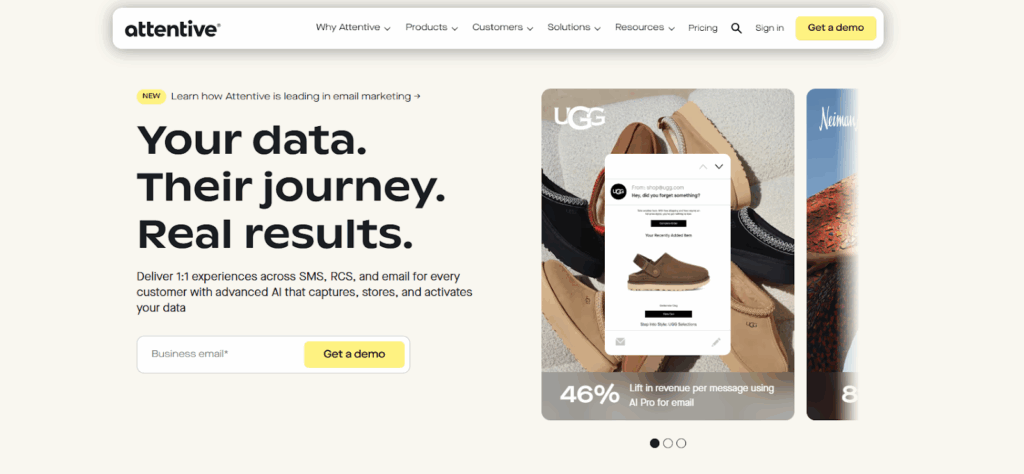
Image Source: attentive.com
The system includes a patented two‑tap mobile signup to grow subscriber lists and supports shipping notifications, onboarding flows, promotions, and review requests.
These workflows help support customer loyalty and improve purchase likelihood, while built‑in tools allow you to maintain a seamless customer experience.
The platform also supports regulatory standards to manage opt-ins, data privacy, and message deliverability. With integration options for over 100 ecommerce, CRM, and marketing tools, you can connect it to your existing systems.
However, the platform is structured for enterprise messaging, and costs may rise as your subscriber base and messaging volume grow. Some businesses find that advanced features and workflows require a learning period or support from Attentive’s account management team.
4. Omnisend
Omnisend is an ecommerce marketing platform that combines email, SMS, and more, with a particular strength in Shopify and other online store integrations.
For SMS marketing, Omnisend offers international SMS sending and includes SMS credits with its plans. You can manage your email newsletters, automation workflows, text message campaigns, and web push notifications side by side.
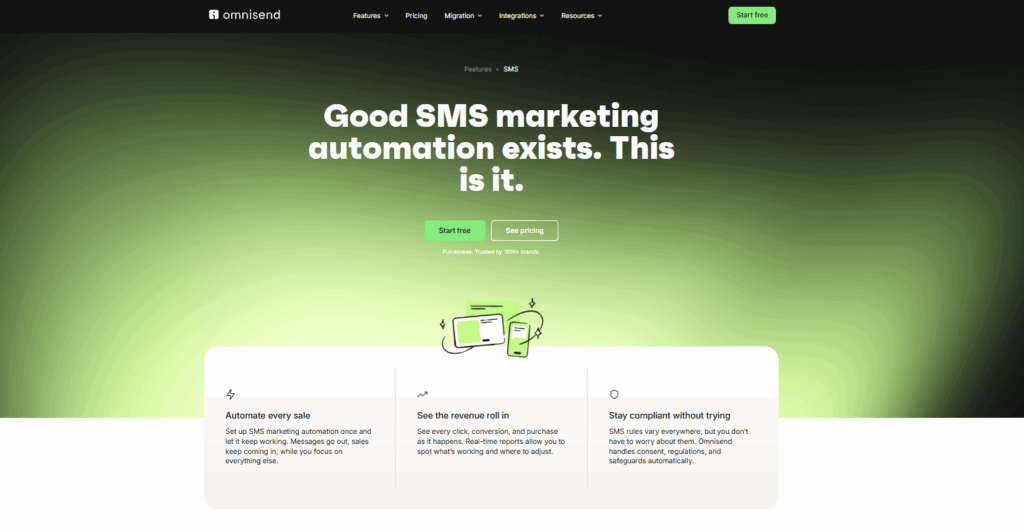
Image Source: omnisend.com
You can set up automated texts just as quickly as automated emails and track the combined impact. With pre-built SMS templates and a visual campaign builder, you can launch SMS campaigns without coding skills.
The platform supports multimedia messaging, so you can include product images, GIFs, or stock photos to make your messages more engaging. It also includes quiet hours and frequency capping, which help prevent texts from being sent at inconvenient times.
Another consideration is the pricing structure. Omnisend’s plans count all contacts in your email list towards your subscription, and some users have pointed out that unsubscribed contacts still contribute to billing unless removed.
5. Yotpo
Yotpo (formerly SMSBump) is an SMS marketing platform widely used by Shopify merchants. If you run a Shopify store, it’s built to plug in and can pull in your product catalog, order data, and customer information to power targeted SMS campaigns.
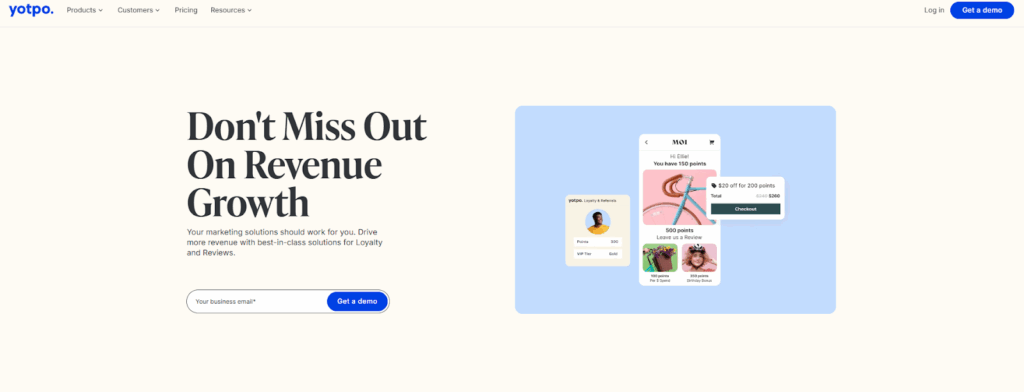
Image Source: yotpo.com
Yotpo supports a variety of triggered automations. You can automatically send a customer a text when their order is confirmed or shipped. It offers rich customization options, including the ability to insert product images or GIFs in messages and use free stock photos in your texts.
You can shorten links and brand them so customers recognize your store name, and embed unique discount codes in messages to drive urgency. For SMS segmentation, Yotpo gives you targeting tools for filtering and grouping your SMS audience by behavior.
The platform seamlessly integrates with a host of other Shopify apps and services as well. It can connect to your loyalty program to send reward point reminders via SMS and sync with email marketing platforms for consistent cross-channel messaging.
On the downside, users have noted several issues with Yotpo’s SMS offering. Yotpo’s pricing for SMS is generally usage-based (per text).
Since it offers many different products, some users feel the platform can become overly complex to navigate when using multiple modules.
6. Emotive
Emotive is an AI-powered conversational SMS marketing platform that pairs with a team of live agents called TextPros, which can help handle two-way conversations with your customers.
Many growing ecommerce brands use Emotive to build their brand voice over SMS, recovering abandoned carts or closing sales through back-and-forth text dialogues rather than one-sided messages.
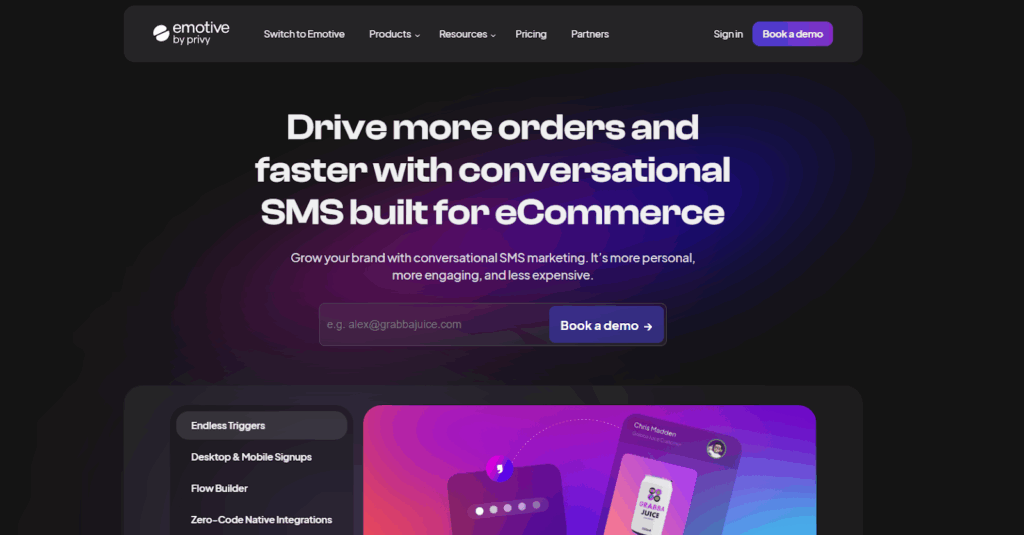
Image Source: emotive.io
Emotive provides a toolkit for SMS marketing, blended with human outreach. The platform includes an easy flow builder for setting up automated text message sequences.
They also offer ready-made templates for various campaign types, so you don’t have to start from scratch for common promotions.
The platform also integrates with major ecommerce platforms and marketing tools, so your SMS campaigns and data can sync with other parts of your stack. It provides detailed attribution tracking so you can see how much revenue each text campaign is generating.
If you’re considering Emotive, there are a few points to keep in mind. The platform’s value-add human agents and guaranteed ROI come at a premium. Some smaller businesses find the cost hard to justify.
Another drawback noted by some is that while Emotive’s customer support is responsive, the dedicated account representatives have changed frequently for certain users, causing inconsistency in guidance.
7. Twilio
Twilio is a communications API platform that provides the technical infrastructure to manage SMS, MMS, WhatsApp, or voice calls via APIs.
It supports advanced capabilities such as custom sender IDs. You can also choose from short codes, toll-free numbers, or 10DLC for reliable delivery. Using the Conversations API, you can create chat-like experiences and engage customers through two-way messaging.
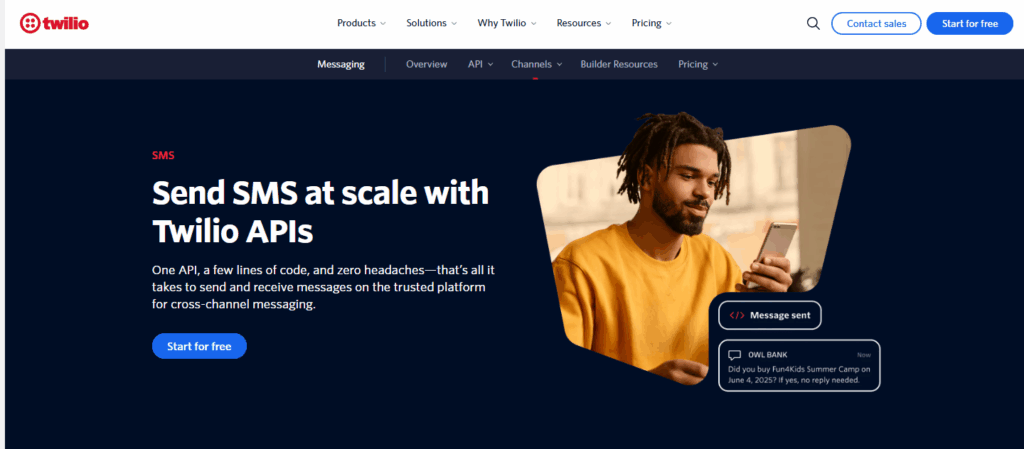
Image Source: twilio.com
The Messaging product and the Twilio Marketing Campaigns suite offer several features for managing contacts, campaign performance tracking, templates, and automation.
Yet, the trade-offs of Twilio mostly relate to its nature as an API/developer platform.
If you do not have developer support or API experience, setting up automated SMS campaigns and managing lists can be a challenge. There is no drag-and-drop interface to create campaigns or design workflows.
Many businesses find they need to either hire developers or use a third-party frontend on top of Twilio to run campaigns, which adds cost and complexity.
8. SimpleTexting
SimpleTexting is an SMS marketing service that allows you to import contacts or collect new opt-ins. The platform lets you import unlimited contacts or collect new opt-ins using web forms and keywords.
It supports sending bulk SMS and MMS campaigns to thousands of subscribers at once, and emphasizes real two-way messaging. You can send out promotions and have back-and-forth text conversations with customers for support or engagement.
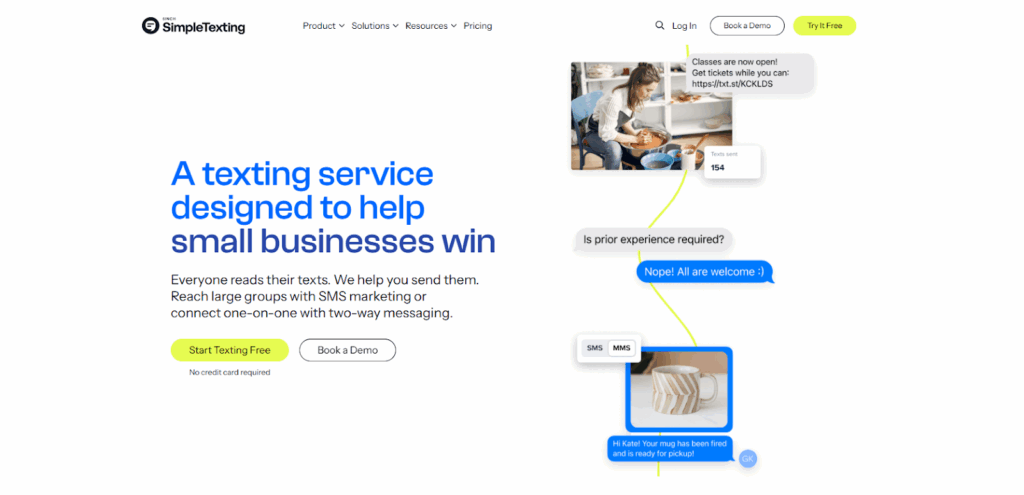
Image Source: simpletexting.com
SimpleTexting also integrates with other systems via third-party integrations. It helps trigger SMS based on external events, so you can send a text when a customer makes a purchase or abandons a cart.
With built-in segmentation tools and insightful analytics, you can tailor messages by purchase history or customer attributes. This supports personalized communication and boosts engagement at every stage of the customer lifecycle.
However, some users have reported a few issues around sending speed and oversight for time-sensitive campaigns.
Some businesses noted that there can be delays in sending messages when scheduling large campaigns. Texts don’t always go out at the exact minute scheduled, but in batches over several minutes or hours.
9. Braze
Braze is an enterprise-level customer engagement platform that includes SMS marketing capabilities. It allows you to unify SMS and RCS messaging with multiple channels.
With Braze, you can send personalized text messages triggered by real-time customer behaviors. It emphasizes dynamic personalization and supports AI-based optimizations to maximize conversion rates from SMS campaigns.
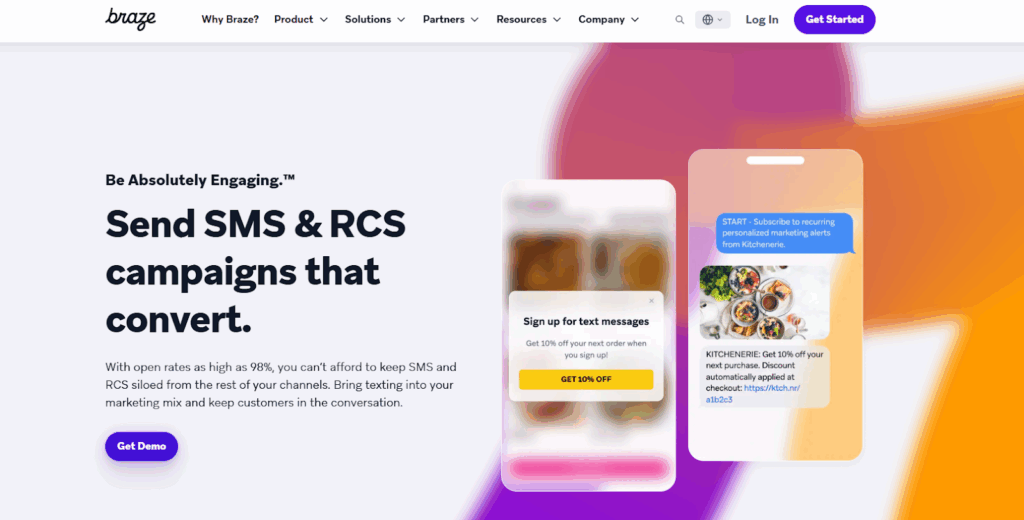
Image Source: braze.com
Braze offers advanced segmentation tools that use first-party data for precise targeting. You can build granular audience segments and use Braze’s journey orchestration to send SMS as part of multi-step campaigns.
Compliance is also handled, with built-in subscription management and opt-out keyword processing to keep SMS programs in line with regulations.
Braze’s rich feature set comes with complexity. Many users point out a steep learning curve, especially for teams new to such an advanced platform. Braze is also regarded as a premium solution where most feedback cites high cost on certain add-ons or high messaging volumes.
10. Sinch
Sinch is a cloud communications provider that offers powerful SMS messaging solutions. Through Sinch Engage, you can run SMS campaigns with rich messaging and benefit from Sinch’s global carrier network for high deliverability.
It offers tools that connect SMS with your existing systems and applications. You can automate message sends based on triggers and manage contact lists for customized communications.
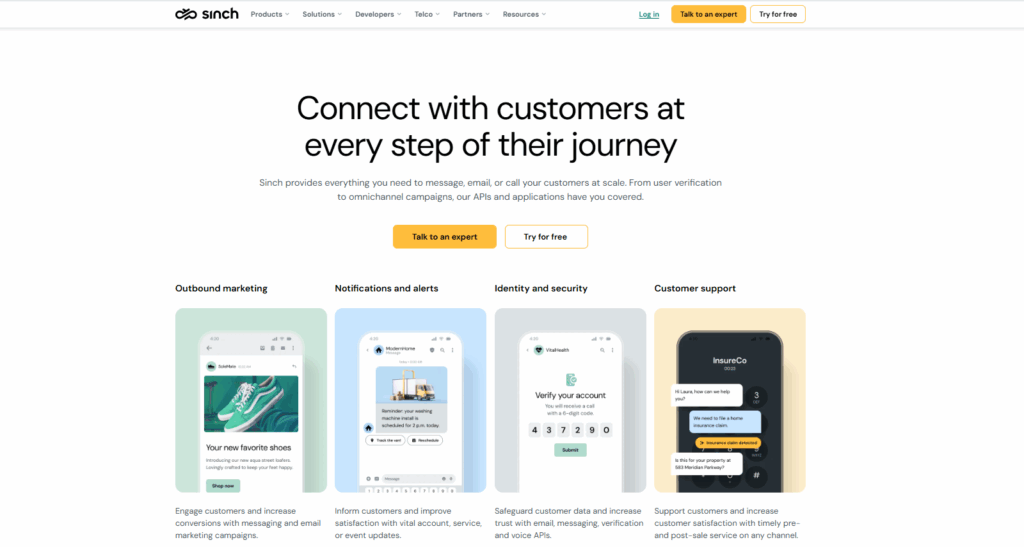
Image Source: sinch.com
The platform also works with standard messaging protocols and supports bulk SMS campaigns, so you can communicate with large audiences or individual recipients as needed.
Developer resources include REST APIs and documentation to support implementation and automation within your applications.
Sinch also includes several features that support compliance, deliverability, and message quality. Its infrastructure includes direct carrier connections.
However, some users note that Sinch’s paid plans can be pricey for smaller businesses. There have also been reports of billing frustrations, such as charges for messages that failed to send and slow customer support response to these issues.
Experience a Platform Built for Strategic SMS Marketing—Switch to Textellent!
When your business depends on constant customer communication, settling for a basic SMS marketing tool limits your results.
Postscript’s strength lies in delivering ecommerce‑specific features that help you drive SMS‑related revenue and customer engagement in an online store environment.
Textellent supports those marketing capabilities while also addressing non‑commerce communication needs that many businesses face daily.
The platform lets you send targeted messages from your business number, automate reminders and follow-ups, and keep all team communications organized in one dashboard.
You can connect texting to your CRM, appointment scheduler, or payment system, so every message arrives at the ideal moment.
Powerful texting compliance tools and message tracking are also built in. You can focus on growing customer relationships without worrying about oversight or manual errors.

Now is the perfect time to experience how the best SMS platform can boost sales while gaining actionable insights. Sign up for a free trial or request a demo consultation with Textellent today!
FAQs About Postscript Alternatives
What is the alternative to PostScript?
An alternative to Postscript is an SMS platform that supports business texting, automation, compliance, and integration with your existing tools.
Textellent is the best alternative that combines advanced workflow automation, two‑way SMS, and integrations with CRMs, scheduling tools, and payment systems to meet your business needs.
Other alternatives include Klaviyo, Omnisend, and Attentive, each with different strengths and pricing models, such as options that are billed monthly or have specific carrier fees.
Is Klaviyo or PostScript better?
Klaviyo is a broader marketing platform that handles SMS and email and is typically used when coordinated cross‑channel campaigns are a priority.
Postscript focuses on SMS marketing in ecommerce environments, with tools for consent capture and purchase‑based triggers. Postscript’s pricing model is usage‑based, with multiple plan tiers that are billed monthly and designed to expand with your SMS program.
Deciding which approach fits your needs comes down to how you plan to integrate SMS with other communication channels and the role SMS plays in your customer engagement strategy.
Is PostScript good?
Postscript is used in ecommerce because it offers tools for list growth, purchase‑linked triggers, and compliance features. Many businesses use it to automate SMS campaigns and connect texting with online shopping behavior.
However, if you require more than marketing-focused texting, Textellent offers more versatility. Its features help you deliver outbound campaigns and responsive engagement at every stage of the customer relationship.

Get Started with Business Texting
Simple to launch, built to scale. Try Textellent FREE for 14 Days
Start Free Trial