

What Is an SMS Campaign? A Guide to Effective Messaging
An SMS campaign is a marketing method where a business sends text messages to a group of people who agreed to receive them. These messages are used to promote offers, share updates, send reminders, or drive traffic to a website.
When built with the right strategy, SMS messages can increase customer engagement, recover lost sales, and strengthen customer communication.
In this article, we’ll explain what an SMS campaign is, the different types you can run, and what makes one successful. You will also learn how to create and send SMS campaigns that turn subscribers into paying customers.
TL;DR
- SMS marketing delivers strong results because it provides a powerful and direct way to reach subscribers.
- You can run different types of SMS campaigns, including promotional, transactional, reminder, abandoned cart, conversational, re-engagement, event, and survey campaigns.
- Successful SMS campaigns rely on personalization, a single call to action, real urgency, proper consent, balanced frequency, and smart timing to maximize performance.
- Creating a high-performing SMS campaign involves defining the trigger, targeting one segment, structuring short action-focused messages, mapping follow-ups, and reviewing metrics like click-through rates and conversions.
- Textellent lets you manage campaigns, automate follow-ups, stay compliant, and track results in one platform.
Why SMS Marketing Delivers Strong Results
Many businesses struggle with communication that fails to get results. According to Attentive, 81% of consumers say they ignore irrelevant SMS marketing messages from brands.
Poor communication leads to lost engagement and fewer repeat customers. It also costs you money when people do not respond or take action on offers.
SMS marketing works by sending short, targeted messages to SMS subscribers who have already agreed to receive them.
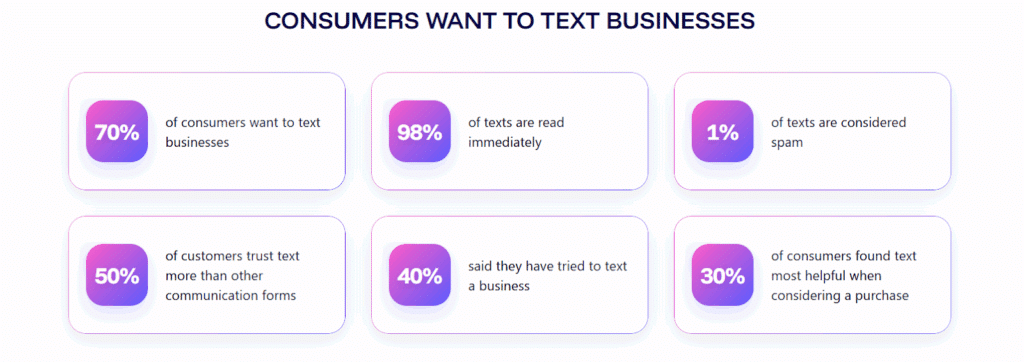
Because the audience has opted in, the foundation for engagement already exists. With proper segmentation and timing, each SMS marketing message can reflect customer interests and recent behavior.
When you use SMS marketing as part of your broader communication strategy, it creates a direct connection with subscribers that few other channels can match.
See how Textellent can support your future SMS campaigns. Sign up for a free trial or request a demo consultation today!
Types of SMS Marketing Campaigns
SMS offers different goals depending on your business needs. Here are the main types of SMS campaigns you can use:
Promotional SMS Campaigns
Promotional messages focus on driving sales or traffic through special offers and announcements. These messages are short, persuasive, and designed to encourage immediate action.
- “Hi Sarah, enjoy 20% off your next order today only. Shop here: link.”
- “John, your exclusive VIP sale starts now. Use code VIP15 at checkout.”
- “Maria, new arrivals just dropped in your favorite category. See them first: link.”
Transactional SMS Campaigns
Transactional messages provide important updates related to a customer’s purchase or account. These informational messages help customers stay updated through delivery and shipping notifications.
- “Hi David, your order #4582 has shipped. Track it here: link.”
- “Emma, your payment was received. Thank you for your purchase.”
- “Chris, your subscription renews tomorrow. Reply STOP to cancel.”
Time-Sensitive SMS Campaigns
Time-sensitive SMS campaigns create urgency around limited offers. These campaigns may involve sending multiple messages within a short window to reinforce the deadline.
- “Lisa, flash sale ends in 3 hours. Get 25% off here: link.”
- “Mark, last chance to register for tonight’s webinar. Save your seat now.”
- “Anna, your cart expires at midnight. Complete checkout here: link.”
Appointment Reminder Campaigns
Appointment reminder campaigns reduce missed bookings and gain more appointment confirmations. These messages confirm time, date, and next steps.
- “Hi Kevin, reminder: dental appointment tomorrow at 10 AM. Reply YES to confirm.”
- “Rachel, your hair appointment is today at 4 PM. See you soon.”
- “Tom, service visit scheduled for Friday at 9 AM. Reply RESCHEDULE if needed.”
Abandoned Cart SMS Campaigns
Abandoned cart SMS campaigns remind customers to complete a purchase they started. They recover lost revenue with a short follow-up message.
- “Hi Mia, you left items in your cart. Finish your order here: link.”
- “James, your sneakers are almost sold out. Complete checkout now.”
- “Olivia, still thinking it over? Here’s 10% off your cart: code SAVE10.”
Conversational SMS Marketing
Conversational SMS marketing allows two-way communication between businesses and customers. These campaigns focus on engagement and real-time replies.
- “Hi Daniel, are you still interested in our demo? Reply YES to book.”
- “Sophia, do you have questions about your quote? Just reply here.”
- “Alex, would you like help choosing the right plan? Reply HELP.”
Re-Engagement SMS Campaigns
Re-engagement SMS campaigns target inactive subscribers or past customers. The goal is to bring them back with a new offer or reminder.
- “Hi, Laura, we miss you. Enjoy 15% off your next visit.”
- “Brian, it’s been a while. Come back and see what’s new.”
- “Chloe, your loyalty points expire soon. Redeem them today.”
Event Promotion SMS Campaigns
Event SMS campaigns drive registrations and attendance for online or in-person events. These messages highlight date, time, and value.
- “Hi Ethan, join our live workshop this Thursday at 2 PM. Save your seat today.”
- “Grace, our store opening is tomorrow at 10 AM. We hope to see you there.”
- “Noah, last call to reserve your spot for Friday’s networking event.”
SMS Surveys and Feedback Collection
SMS survey campaigns collect customer opinions and ratings after an interaction or purchase. They help businesses improve service and measure satisfaction.
- “Hi Natalie, how was your visit today? Rate us from 1 to 5.”
- “Ryan, please share your feedback on your recent order.”
- “Ava, would you recommend us to a friend? Reply YES or NO.”
What Makes a Successful SMS Campaign
When used correctly, SMS campaigns can engage customers, attract new customers, and boost sales alongside your other marketing channels.
Below are the key elements that shape your text message marketing campaigns.
Personalization
Personalization increases engagement because people respond more to messages that reflect their interests or behavior. You can integrate SMS into your overall marketing mix to create stronger targeting.
Using a subscriber’s first name, referencing a recent purchase, or sending an offer tied to past activity can improve response rates.
Messages that are specific to the reader tend to receive more attention than generic blasts and help build long-term customer loyalty.
Clear Call to Action
Every SMS campaign should focus on a single objective so the reader knows what to do after reading the message. Strong call to actions (CTAs) make it easy to communicate directly and guide the subscriber toward one decision.
Examples include “Shop now,” “Reply YES to confirm,” “Book your appointment,” or “Claim your discount.” The instruction should appear naturally within the message content and be easy to follow within seconds.
Urgency and Scarcity
Urgency motivates faster decisions. When an offer ends soon or availability is limited, customers are more likely to respond right away.
Phrases that highlight a real deadline or limited quantity can increase conversions, as long as the urgency is honest and accurate.
Compliance and Consent
Customers must opt in before you send messages, and explicit consent must be documented.
Some businesses use a double opt-in process to confirm that subscribers want to receive SMS communications. Permission-based messaging protects both your business and your subscribers.
Frequency Control
Message volume has a direct impact on retention. Too many messages increase opt-out rates and can frustrate subscribers. Too few messages reduce visibility and weaken brand recall.
Unsubscribe rates and response data guide the right balance. You need to review engagement trends after each campaign and adjust frequency based on performance.
Timing Strategy
Timing influences how a campaign performs. SMS performs well for weekly promotions, event reminders, and delivery notifications.
Messages should align with your audience’s daily routine and time zone. Promotional offers perform better during mid-day breaks or early evening hours. Appointment reminders should be sent far enough in advance to allow confirmation or rescheduling.
How to Create a Successful SMS Campaign
A successful SMS campaign starts with planning. Text messages are brief, but the strategy behind them should be intentional.
Here are the steps to create a successful SMS campaign:
Define the Campaign Trigger
A trigger is the specific event, action, or condition that justifies sending a message.
Triggers can be tied to customer behavior, business events, or timing. For example, a cart abandonment, a recent purchase, an upcoming appointment, a product launch, or a loyalty milestone can all serve as strong triggers.
Each one connects the message to something relevant in the customer’s journey, which increases the chance of action.
A defined trigger improves targeting. Instead of sending a general promotion to your entire list, you send an SMS campaign to people connected to that specific event.
Build the Campaign Around One Segment
When you narrow your focus to one group, the message becomes more persuasive. Audience segments can be based on purchase history, lifecycle stage, behavior, or loyalty status.
For example, first-time buyers may need a welcome message, while repeat customers may respond better to exclusive rewards. Inactive subscribers may require a re-engagement incentive.
Targeting one segment also protects your list’s health. Subscribers receive relevant messages that match their interests or recent actions, which reduces opt-outs and increases conversions.
Structure the Message for Fast Decisions
Most subscribers scan a message within seconds and decide whether to act or ignore it. Your message should communicate value immediately and guide the reader toward one action.
You need to let the subscriber know what they gain, such as “Shop now,” “Reply YES,” or “Book today.” Keep the message length short so it is easy to read on any mobile phone.
You also have to keep the structure easy to scan. Each message should support a specific goal and action. When subscribers understand the value and the next step immediately, response rates increase.
Map the Follow-Up Before You Send
Before you launch, make sure to decide what happens after the first text goes out.
If someone clicks and purchases, they should not receive reminder texts about the same offer. If someone does not respond, you may send one follow-up message with a new angle or deadline.
If someone does not respond, you may send one follow-up message with a new angle or deadline. You should also determine how many messages will be included in the sequence so subscribers are not overwhelmed.
Review Performance and Adjust
After your SMS campaign ends, you have to take time to study the results. Look at what actions subscribers took after receiving the text.
You have to review metrics such as delivery rate, click-through rates, conversions, and opt-out rate. Compare results on all segments to see which audience responded best.
Testing small timing adjustments can reveal opportunities to improve response rates without changing the offer itself. You need to analyze the best time to send marketing messages according to your industry.
Create Data-Driven SMS Campaigns With Textellent
Without proper targeting, automation, and tracking, SMS becomes just another channel instead of a predictable growth driver.
An SMS marketing platform like Textellent brings structure and control to your SMS marketing strategy. You can segment audiences based on behavior, automate follow-ups, and personalize messages from one platform.
You also gain full visibility into performance. You can track clicks, conversions, and subscriber activity, while built-in consent management keeps your campaigns compliant.
Your next stage of growth depends on smarter customer communication. If you want your future campaigns to drive measurable engagement and sales, it’s time to upgrade your approach.
Sign up for a free trial or request a demo consultation with Textellent and see how a focused mobile marketing strategy can produce stronger, more consistent results!
FAQs About What Is an SMS Campaign
What are SMS campaigns?
SMS campaigns are marketing or service messages sent by a business to a group of subscribers who have permitted to receive texts. These messages promote offers, confirm appointments, share updates, or request feedback.
Subscribers join through website sign-ups, in-store forms, or qr codes. Once they agree, they can receive messages about sales, events, or order updates.
Why do Americans still use SMS?
SMS remains popular in the United States because it works on every phone and every operating system. That makes it simple and reliable.
Many consumers prefer SMS for appointment reminders, delivery updates, and time-sensitive offers. Text messages also stand out compared to crowded feeds on social media and other messaging apps.
How much does an SMS campaign cost?
SMS marketing cost depends on how many texts you send and which platform you use. Some businesses choose a short code for branding and recognition, which can increase cost.
List size, message frequency, and the type of phone number used also influence the cost. You should compare campaign cost to revenue generated to measure return on investment.
How to create an SMS campaign?
Start with a goal, such as driving sales or confirming appointments. You need to build a permission-based contact list and segment subscribers based on behavior or interest.
Write a short message with one strategic call to action. Choose an appropriate send time, launch through an SMS platform, and track performance metrics such as clicks and conversions.

Get Started with Business Texting
Simple to launch, built to scale. Try Textellent FREE for 14 Days
Start Free Trial