

10 Best Two-Way Texting Software for Better Conversations
Customers expect quick replies, but voice calls get missed, and emails often go unread for hours.
It gets harder to keep up with all the messages and follow-ups as the day goes on, especially when conversations happen in multiple channels.
If you take too long to respond or don’t respond at all, leads may lose interest, and customers may look elsewhere. This usually happens when teams grow. Not a sign of failure, but rather a sign that communication needs a better system in place.
Two-way texting software helps solve this. You can send and receive text messages in real time, so conversations don’t stop after the first interaction.
In this guide, we will cover the best tools available, the main features to look for, and how to select the perfect platform for your business.
TL;DR
These are the best two-way texting software platforms for 2026:
1. Textellent
2. SimpleTexting
3. Textline
4. EZ Texting
5. Twilio
6. SlickText
7. TextMagic
8. ClickSend
9. Textedly
10. Omnisend
Why Two-Way Texting Works Better for Everyday Communication
Two-way texting software gives businesses a simple way to send and receive text messages in real time, so conversations don’t stop after the first interaction.
It does not bother people during the day as phone calls do. Unlike email, messages don’t sit unread for hours.
Customers can reply when it’s convenient, which leads to faster customer engagement and fewer missed opportunities.
With two-way messaging, conversations feel more natural because customers can respond right away instead of waiting or switching channels.
This makes it easier to manage both outbound and inbound messages without breaking the flow of communication.
Many platforms also support automated responses, which help you reply quickly while still keeping the conversation going.
Conversational messaging eventually leads to better and more meaningful conversations. People feel heard, and your company remains visible through simple, interactive communication.
10 Best Two-Way Texting Software Platforms
Not every platform works the same way. Some help you respond quickly, while others help you keep track of campaigns, follow-ups, and ongoing conversations.
Below are the ten best two-way texting software platforms and what they offer:
1. Textellent
Many bulk SMS service providers focus on sending volume, not conversations. That means businesses get texts that go nowhere and are easy to ignore.Textellent is built as a two-way texting software solution that keeps conversations active and personal at scale. It works as a complete SMS marketing platform, so you can manage campaigns and real-time replies in one place.
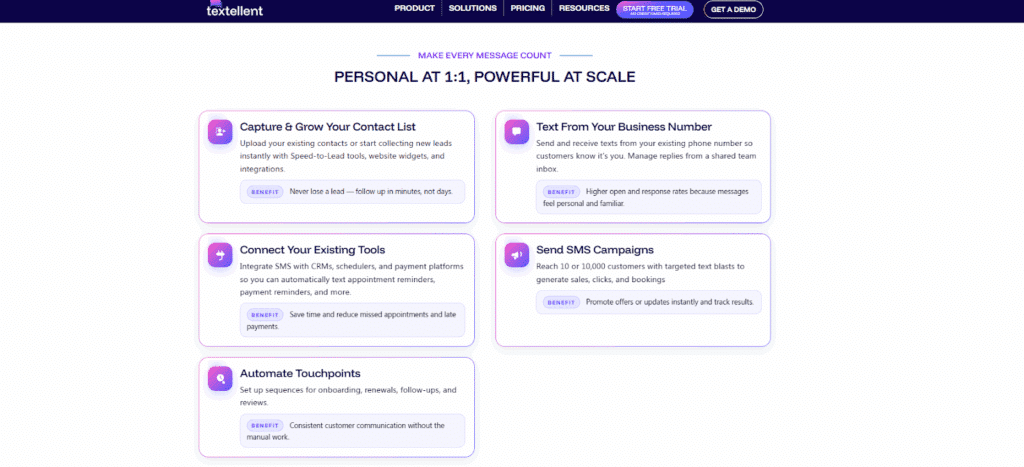
Here’s what makes Textellent stand out:
Text-Enable Your Existing Phone Number
Textellent lets you send messages from the number your customers already recognize. This builds trust and improves response rates.
Familiar numbers make it easier for customers to engage, which leads to stronger SMS campaigns and better results from everyday conversations.
Shared Inbox for Team Conversations
All messages flow into one shared workspace. Your team can assign chats, respond faster, and keep conversations organized.
This setup lets you have ongoing talks and structured SMS marketing campaigns at the same time without any problems or confusion. It also helps prevent duplicate replies and keeps every interaction consistent.
Automation + Real-Time Replies
Textellent automates texting and lets you send real-time messages. You can respond right away to new leads, missed calls, or questions, and you can still have real talks when you need to.
This balance improves response speed and helps maintain a strong customer engagement strategy.
Appointment Reminders and Follow-Ups
Automated reminders reduce missed appointments and keep customers informed. Follow-ups help bring customers back and increase repeat business.
These features strengthen your SMS marketing strategy by keeping communication consistent and timely.
Segmentation and Personalization
Textellent lets you put people into groups based on how they act, what they like, or what they do. You can send targeted SMS marketing messages that match each audience.
Personalized messaging leads to better engagement and stronger results across your SMS marketing campaigns.
800+ App Integrations
Textellent connects with over 800 tools, so you can sync contacts and automate workflows across your systems.
It also works on its own, making it a flexible choice for businesses that want reliable SMS marketing services without a complex setup. Teams can trigger messages and manage follow-ups without switching between platforms.
AI Rewrite + Translate
You can change the tone, make things clearer, and translate messages right away with the built-in AI Rewrite tool.
This keeps your SMS marketing messages clear, professional, and ready to send without extra editing time. It also helps teams respond faster while keeping communication consistent.
Analytics and Tracking
Keep track of replies, delivery rates, and how engaged people are in conversations and projects.
These insights help you improve your SMS marketing efforts and understand what drives real responses. You can quickly change campaigns based on what gets people to respond and buy.
Built for the Full Customer Journey
Textellent supports communication from first contact to long-term follow-up.
You can capture leads, nurture them, confirm appointments, and stay connected after the sale, all within one SMS marketing software.
Textellent Pricing Plans
Textellent offers a 14-day free trial so you can explore its features before committing. It is easy to test the site because the trial comes with 25 SMS credits and access for one user.
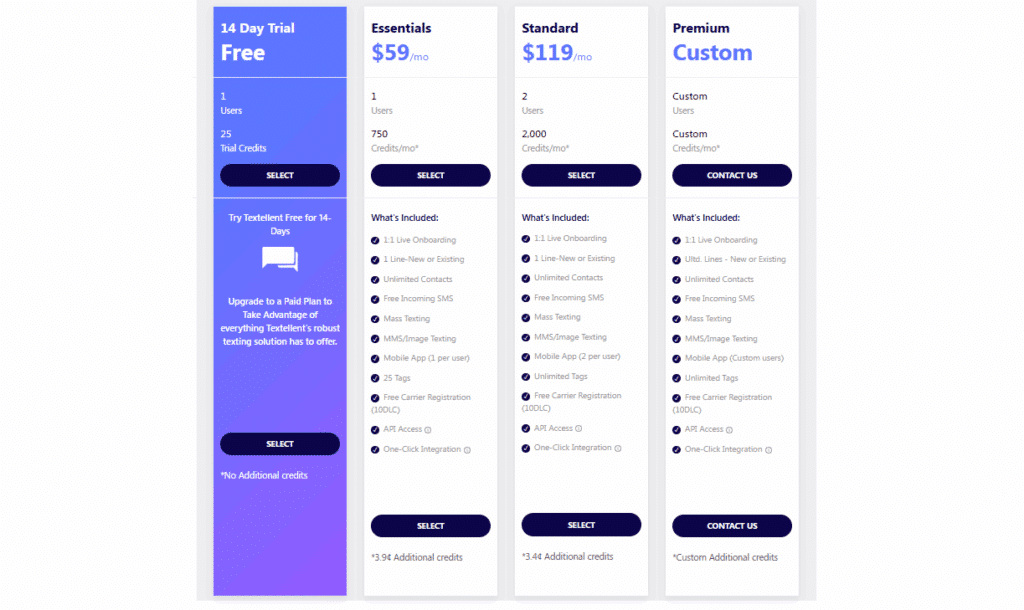
- The Essentials plan starts at $59 per month and includes 750 SMS credits. This plan works well for small teams with steady messaging needs.
- The Standard plan costs $119 per month and includes 2,000 SMS credits. It fits growing businesses running larger SMS marketing campaigns and ongoing conversations.
- The Premium plan offers custom pricing for businesses with higher volume or more complex requirements.
These options give you a free plan entry point and flexible pricing as your messaging needs expand. You can also save 17% if you opt for annual billing.
If you want better follow-up, stronger response rates, and a platform that supports real conversations, Textellent gives you more than basic sending features.
Sign up for a free trial or request a demo consultation to see how Textellent can improve your customer conversations and response rates!
2. SimpleTexting
SimpleTexting is a texting platform that helps businesses send SMS messages at scale and manage two-way conversations in one place.
You do not have to switch between tools to run campaigns, plan messages, or follow up with customers. This makes it useful for both daily communication and mass texting campaigns.
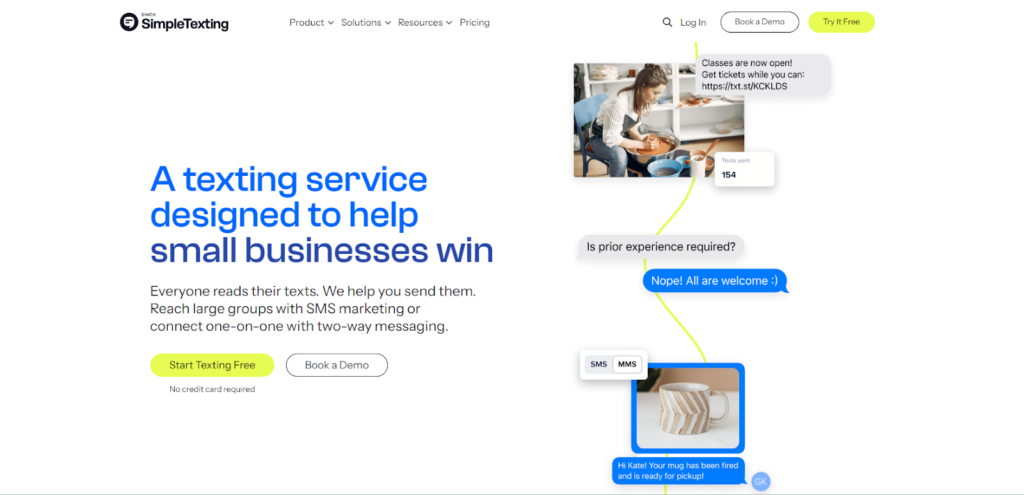
Source: simpletexting.com
You can also respond to incoming messages via a shared inbox, keeping conversations orderly and manageable.
For example, a company can send out a promotion to a wide group of people and then respond to inquiries from clients who wish to reserve a service. It is now easy to hold real conversations through SMS.
SimpleTexting also includes tools to grow your contact list, group customers, and send more relevant messages. You can track delivery rates, clicks, and overall performance to see what’s working and adjust your approach over time.
One source of concern is the contact upload procedure, particularly with larger lists, which might become jumbled. Costs may also rise if you send a large number of messages, and credit options may appear limited for smaller campaigns.
3. Textline
Textline focuses on helping teams handle real-time customer conversations through two-way SMS messaging, especially for support and day-to-day communication.
Rather than managing messages between many tools, teams can react to queries, answer questions, and follow up from a single shared workspace. This keeps customer communication organized and makes it easier to handle as the number of messages increases.
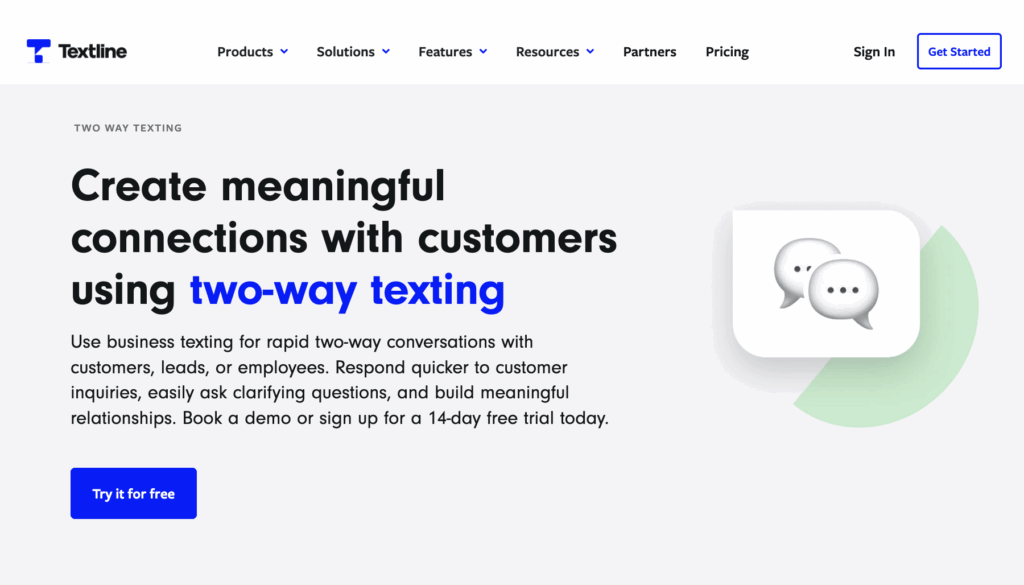
Source: textline.com
A support team can reply to a customer question, ask for more details, and resolve the issue in the same thread. This back-and-forth flow helps with engaging customers while keeping responses quick and clear.
Textline also includes tools like shared inboxes, message templates, automation, and contact management. These features help teams stay consistent and respond without repeating the same messages.
Since its strength is in conversation management, Textline is more focused on real-time messaging than large-scale campaigns. Businesses that need advanced marketing features may find it more limited compared to other platforms.
4. EZ Texting
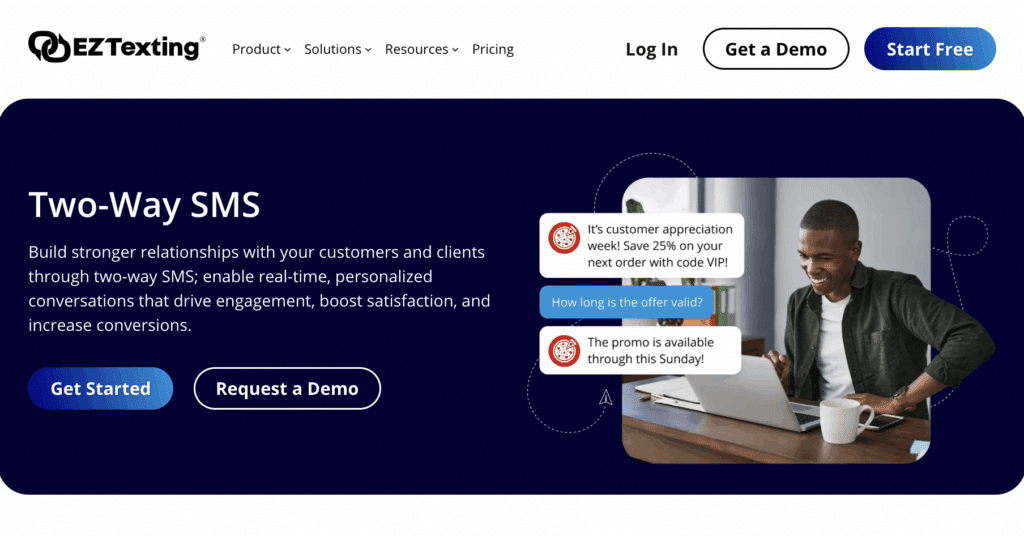
Businesses can use EZ Texting to run campaigns and handle conversations without extensive training.
It has an easy-to-use web app that lets you handle contacts, send texts, and set up automatic follow-ups. This means that even teams without technical knowledge can use it. It also lets you send a lot of messages at once, set reminders, and do simple two-way texting.
Source: eztexting.com
For instance, a business can send a promotion, schedule reminders, and respond to replies in the same system. This helps keep communication consistent while reducing manual work.
EZ Texting also includes tools like automation workflows, contact management, and reporting. These features help teams stay on top of things, send messages at the right time, and see how well campaigns are doing.
Many businesses use it as one of their go-to SMS apps for day-to-day messaging and outreach.
One thing to consider is that costs can increase as the number of messages increases. Some advanced features and automation tools are also limited to higher-tier plans.
5. Twilio
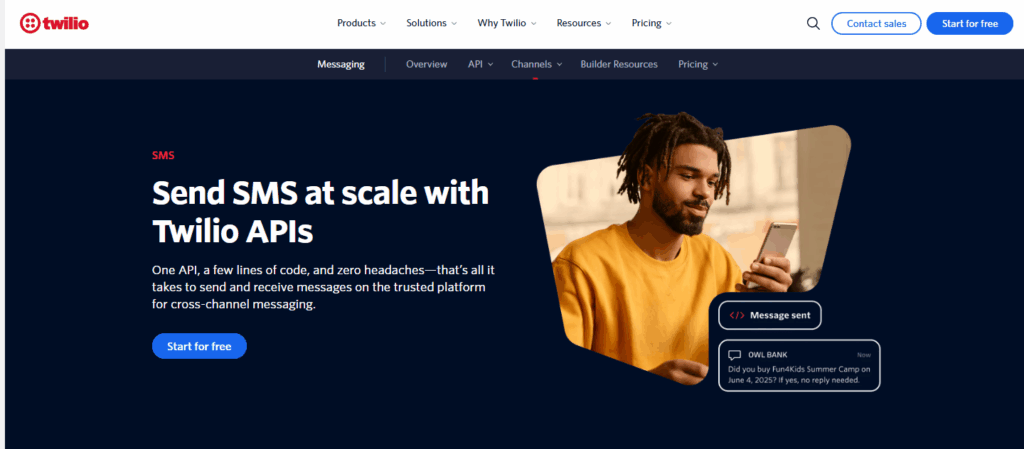
Twilio is a messaging platform built for businesses that want to add texting to their own systems using APIs and developer tools.
It is often used by teams that need more control over how messages are sent, routed, and tracked. Businesses can use it to send alerts, reminders, promotions, and have two-way conversations. It also links SMS to other channels like WhatsApp and chat.
Source: twilio.com
Twilio works well for companies that already have technical support in place. Using an SMS API gateway and Twilio’s programmable messaging tools, a company can create unique messaging flows for things like schedule updates, verification codes, or customer service.
It also has tools for scheduling messages, statistics, compliance, and sending messages all over the world. This gives larger teams more flexibility when they need texting to fit into an existing product or workflow.
Given its developer-focused nature, Twilio may feel more technical than other options on this list. It is effective for custom builds, but teams without developer resources may find it difficult to set up and administer.
6. SlickText
SlickText is an SMS marketing tool designed to help businesses send campaigns and manage customer replies in one place.
It focuses on sending targeted messages to large audiences while still giving you the option to handle responses. You can run ads, get people to subscribe, and sort friends into groups based on how they act or what they like.
Source: slicktext.com
For instance, a company can send out a campaign about an offer and then react to customers who ask questions or show interest. This allows you to convert outreach into a simple two-way SMS chat without switching programs.
SlickText additionally contains tools for audience segmentation, automation workflows, and engagement statistics. You can create lists using keywords, forms, and QR codes, and then send more relevant messages based on how people engage with those lists.
Since its strength is in campaigns, SlickText is built more for outbound messaging than ongoing conversations. Teams that need deeper conversation management or support workflows may find it less flexible compared to other business texting platforms.
7. TextMagic
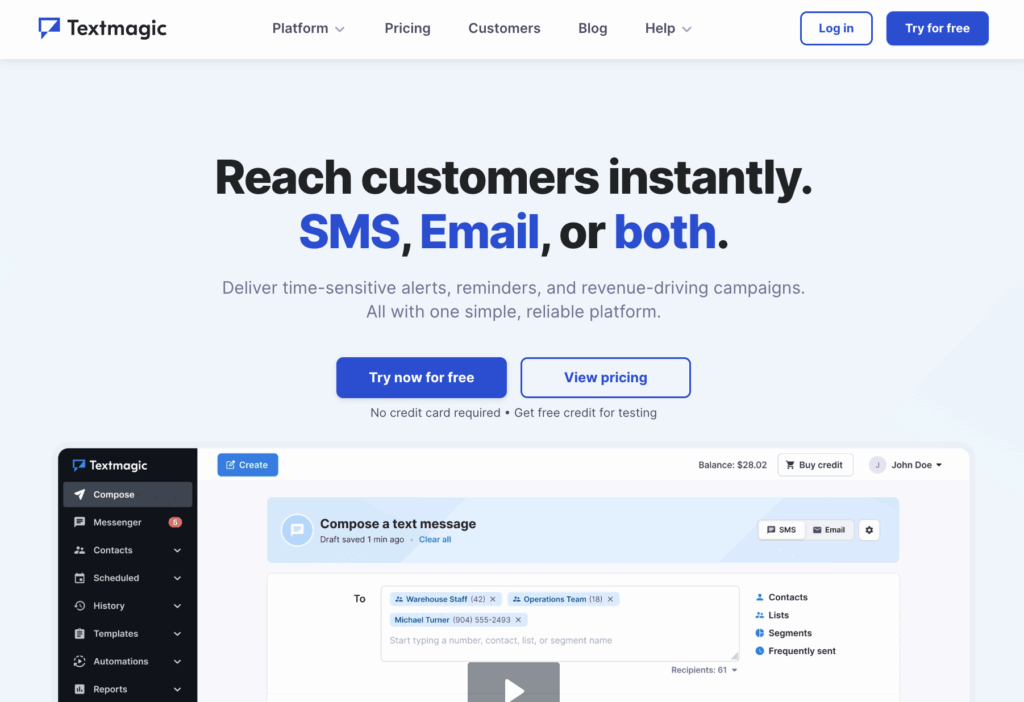
TextMagic is a business texting platform that helps companies send messages, manage replies, and stay connected with customers in one place.
It combines SMS and email, so you can send campaigns, alerts, and reminders while keeping all of your chats in one place in a shared inbox. You can also handle answers right away, which lets you keep talking without having to switch tools.
Source: textmagic.com
A business can send appointment reminders or updates, then respond to customer questions right away. This helps create more seamless communication and keeps conversations moving without delays.
TextMagic also has automation, contact management, and reporting tools that let you keep track of replies and get better at communicating over time. The SMS service comes with a pay-as-you-go plan, which lets you choose how much to use it.
On the downside, it is better suited for sending messages and handling basic replies rather than managing more complex, ongoing conversations as communication needs grow.
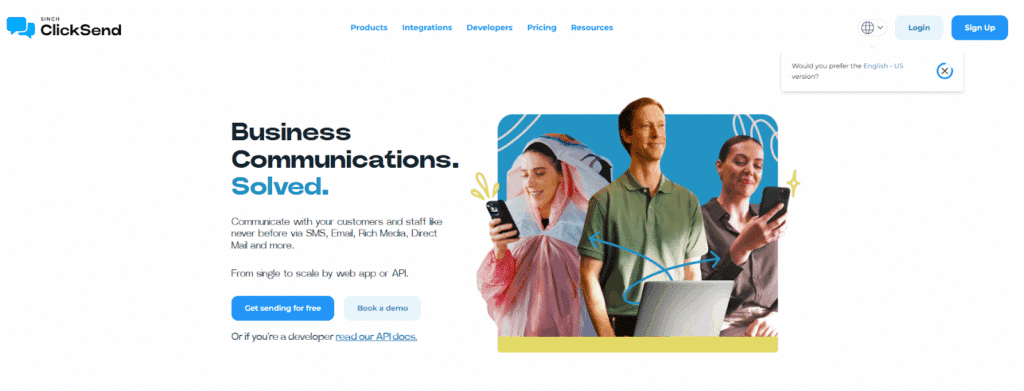
8. ClickSend
ClickSend is a messaging platform that helps businesses send and receive text messages at scale using a web dashboard or API.
With its ability to handle a lot of messages at once, you can send ads, alerts, and reminders, and still get responses from customers. You can manage messages through a browser, email-to-SMS, or connect it directly to your systems.
Source: clicksend.com
A company can send notifications or schedule reminders and then handle customer responses from the dashboard. This means that basic back-and-forth communication can happen without the need for different tools.
ClickSend also includes automation, integrations, and global delivery features, which make it useful for teams that need reliable message delivery in different regions. It works well for both simple campaigns and system-triggered messages.
Given its delivery-focused design, ClickSend excels at sending and receiving messages rather than managing ongoing discussions. Teams that need advanced inbox features or deeper conversation workflows may find it less suited for handling continuous customer interactions.
9. Textedly
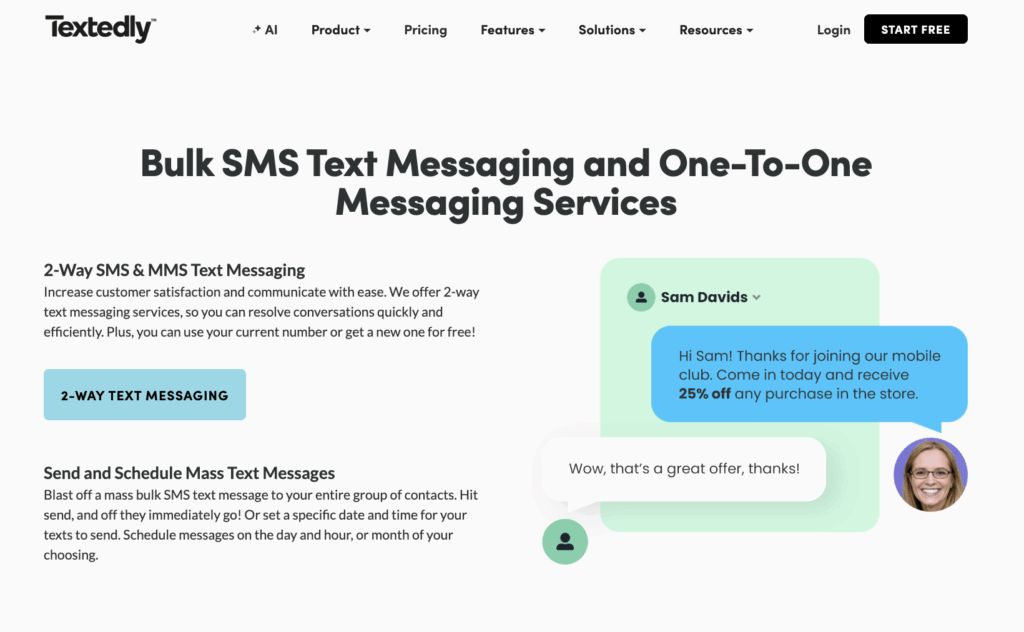
Textedly is a texting platform built for businesses that want an easy way to send campaigns, manage replies, and reach many customers simultaneously.
It combines bulk texting with one-to-one messaging, so teams can send promotions, reminders, and updates while still replying to incoming questions. It also includes features like scheduled texts, drip campaigns, keywords, and contact management.
Source: textedly.com
A business can send a large message to its contact list, then continue the conversation with people who reply with questions, requests, or interest. This makes it useful for both outreach and day-to-day communication.
Textedly also includes tools for surveys, reviews, automation, and team messaging. It allows organizations to easily organize contacts, personalize messages, and handle replies with little setup.
One big worry is that Textedly focuses extensively on bulk messaging and promotional use cases. Teams that need deeper inbox collaboration or more advanced conversation workflows may find it less flexible than platforms built more around ongoing two-way communication.
10. Omnisend
Omnisend is a marketing automation platform built mainly for e-commerce brands that want to manage email and SMS in one place.
It combines campaigns, automation, segmentation, and signup forms, so businesses can run promotions, recover abandoned carts, and send follow-ups from a single dashboard.
Source: omnisend.com
Plus, it offers two-way SMS, so brands can respond to customer messages without leaving the site.
For instance, an online store can send a discount code by text, follow up automatically if the customer does not buy, and track clicks and sales in real time. This makes the text messaging software very useful for shops that want to connect SMS to sales.
Omnisend also includes pre-built automation templates, reporting, quiet hours, and audience targeting. These features help ecommerce teams send messages at the right time and adjust campaigns based on customer behavior.
Given its e-commerce-focused nature, Omnisend may feel less flexible for service businesses or teams that need texting mainly for support, scheduling, or internal communication.
Must-Have Capabilities in Two-Way Texting Software
Picking the right platform means picking features that work with how your team talks to each other every day. Below are the key capabilities to look for when selecting a two-way texting software for your business.
Shared Inbox
A shared inbox keeps all conversations in one place, so your team can easily track and respond to messages. Instead of switching between devices or accounts, everyone can view the same conversation history and stay aligned.
This is especially helpful when multiple team members handle replies. It reduces misunderstandings, prevents people from sending the same answer twice, and makes sure no customer message is missed.
Use of Existing Business Numbers
Customers are more likely to respond when messages come from a number they already recognize. Using your existing business number helps maintain trust and keeps communication consistent in multiple communication channels.
It also makes your messages feel more personal. Instead of looking like a generic notification, the message feels like a direct conversation with your business.
Automation and Scheduling
Automation lets you send follow-up, confirmation, and appointment-reminder texts at set times without having to do it manually. This helps your team stay consistent, even during busy periods.
For example, you can automatically send a reminder before an appointment or follow up after a service. This keeps communication active while supporting a stronger overall communication strategy.
Contact Segmentation
Segmentation helps you order your contact lists by how they behave, what they like, or how you have interacted with them in the past. This makes it easier to send targeted messages that are more relevant to each group.
Instead of sending the same message to everyone, you can tailor your outreach. Some platforms also support unlimited keywords, which gives you more flexibility in how customers join lists and interact with your campaigns.
CRM and Tool Integrations
SMS integrations enable your SMS platform to connect with your existing systems, such as customer relationship management (CRM) platforms or scheduling apps. It keeps customer information up to date and cuts down on the need to enter it by hand.
That way, your team can react more quickly and keep conversations on track across all tools without having to switch between them.
MMS Support
With MMS messaging, you can send images, links, and files along with your text messages. This makes communication more engaging and easier to understand.
For example, you can send a photo, a service update, or a promotional graphic. These types of personalized messages tend to get more attention than plain text.
Reporting and Tracking
Reporting tools keep track of replies, clicks, and general campaign performance to help you see how well your messages are doing. This gives you a clear view of what’s working.
Over time, these lessons help you change how you talk to people, when you talk to them, and how you decide what to do with future campaigns.
Mobile Access
Mobile access allows your team to reply to messages from anywhere, not just from a desktop. This is important when conversations need quick responses throughout the day.
It also makes it easier to manage communication on the go, especially for teams handling multiple conversations at once.
Common Ways Businesses Use Two-Way Texting in Daily Operations
Two-way texting is useful for teams because it helps them reply more quickly and keep the conversation going. Instead of switching between tools, businesses can manage ongoing communication in one place.
Lead Follow-Up
It is simple to miss leads when your team is busy or moving between tools. Leads can come in at any time of the day. People often go to another business or change their minds when they do not hear back right away.
Two-way texting makes it easier to respond right away and start one-on-one conversations without extra steps. A quick reply helps you stay top of mind and keeps the conversation moving while the interest is still there.
For small businesses, this can make a big difference. Faster responses often mean more booked calls, more appointments, and better chances of turning inquiries into customers.
Appointment Scheduling and Reminders
If you miss an appointment, it can throw off your plan and cause gaps in your day. When customers forget or don’t show up, it can affect both revenue and planning.
Texting lets you send confirmations and notes that keep customers up to date. These messages can be part of simple SMS campaigns or triggered automatically using SMS templates, which saves time while keeping communication consistent.
Customer Service
Customers don’t always want to call or wait on hold for answers. When support is slow, frustration builds, and conversations can drop off.
Two-way texting allows your customer support team to handle questions through quick, ongoing conversations. Instead of long wait times, customers get fast replies, which makes the experience easier and more convenient.
Many businesses rely on this type of two-way SMS software to keep conversations active without adding extra workload.
Payment and Billing Messages
When done by hand, following up on payments can take a while. Texting makes it easier to send reminders and answer quick questions without back-and-forth emails.
This keeps communication clear and reduces delays, while helping your team maintain streamlined communication throughout different interactions.
Review Requests
Customer feedback is easier to collect when you ask at the right time. A quick message after a service or purchase makes it simple for customers to respond.
These short two-way conversations feel natural and increase the chances of getting honest customer feedback without adding extra steps.
Internal Communication
Two-way texting is not just for customers. Teams also use it to coordinate schedules, hiring updates, and daily operations.
It helps create faster communication between staff, especially when managing multiple tasks at once. This is one reason why texting continues to grow as a practical communication tool in the SMS marketing industry.
Start Better Conversations With Two-Way Texting Using Textellent
Strong customer communication drives better results. Fast replies, clear messages, and consistent follow-ups all play a role in how customers respond.
Textellent makes it easier to manage conversations without adding more work. You can automate replies, stay organized, and keep every message personal as your business grows.
You don’t need multiple tools to handle campaigns, reminders, and real-time conversations. Since everything is in one place, your team can respond more quickly and be consistent in all of their interactions.
This keeps conversation quality high, making scaling messaging easy. Customers receive prompt responses, and your staff keeps in control even at hectic times.
If you want to simplify your messaging and improve how you connect with customers, sign up for a free trial or request a demo consultation today!
FAQs About Two-Way Texting Software
What is the difference between one-way and two-way texting?
Two-way texting allows customers to reply and start conversations, while one-way texting is used for sending bulk messages without expecting a response.
Businesses that need to talk to customers right away often use two-way texting to better handle interactions with customers and improve overall customer satisfaction.
Can two-way texting be automated?
Yes, many platforms allow you to automate parts of the conversation, such as sending reminders, follow-ups, or initial responses.
At the same time, customers can reply and continue the conversation naturally, which keeps the experience personal and consistent.
What should businesses look for in a two-way texting platform?
Businesses should look for features that support both communication and compliance. You should be able to follow rules like the Telephone Consumer Protection Act (TCPA) with the help of a trusted platform. This way, you can properly handle opt-ins and customer consent.
Security also matters, especially when handling customer data. Features like security two-factor authentication help protect accounts and keep customer data safe during daily messaging.

Get Started with Business Texting
Simple to launch, built to scale. Try Textellent FREE for 14 Days
Start Free Trial