

How to Build a Mobile Marketing Strategy for Long-Term Growth
Whether someone is browsing, buying, or looking for support, cellular communication has become the front door to your business.
That shift has made mobile marketing a top priority for brands that want to stay visible and relevant. But with so many channels and tools out there, building a plan that works can feel more complicated than it should be.
Many ecommerce companies struggle to keep up with mobile behavior. Slow-loading sites, clunky forms, and hard-to-track campaigns are a few reasons mobile visitors bounce before they convert.
In this article, we’ll break down how to build an SMS mobile marketing strategy that meets your buyers’ expectations and moves them from interest to action.
TL;DR
- Long-term mobile marketing growth starts with strategic goals, mobile-friendly content, the right communication channels, and continuous testing.
- Mobile marketing now influences most buying decisions, with smartphones driving the majority of retail site visits and online purchases.
- The most impactful mobile marketing techniques include SMS campaigns, mobile-optimized websites, in-app messaging, QR code promotions, and location-based marketing.
- Messaging channels like SMS create stronger customer engagement by reaching people in real time and making communication easy to respond to.
- Textellent offers a complete platform for business texting, which makes it easy to launch campaigns, track performance, and connect with mobile-first customers.
Why Mobile-First Behavior Drives Buying Decisions
According to Statista’s ecommerce report, smartphones made up nearly 80% of all retail website visits worldwide and drove most of the online orders in 2025.
Many people rely on their phones for online access, which means a slow mobile experience can immediately push buyers away. This makes mobile search engine optimization (SEO) and quick-loading pages critical to your success.
Everything from navigation to content layout plays a role in enhancing user experience, and that experience affects your sales and retention.
Texting fits right into how people already use their mobile phones. A mobile text message helps them confirm a purchase, answer a question, remind someone about an appointment, or follow up after a visit.
In business marketing, SMS opens a direct line to mobile customers. This kind of immediate access can lead to better customer engagement and stronger results across the board.
How Mobile Marketing Strategy Supports the Buyer Journey
Since most shoppers now begin their journey on a mobile device, your business needs to be easy to interact with at each point. The stronger your mobile experience, the easier it becomes to win and keep attention.
Awareness Stage
Buyers often start with a search, social scroll, or ad click on their phone. Mobile marketing helps you show up where they’re already looking.
Mobile search ads, location-based promotions, and social media marketing campaigns can all bring in attention at this early stage.
If your mobile marketing campaign loads fast, fits the screen well, and leads to a next step, you stand a better chance of making that first connection stick.
Consideration Stage
Once a buyer knows about your product or service, they’ll read reviews, browse your site, and maybe message you for answers from their phone.
Your strategy should make these steps simple. If your content, pricing, FAQs, and product pages are built for mobile, buyers stay engaged.
Complete product info, accessible pricing, short videos, and real-time chat or texting tools all help buyers get what they need to make a confident choice.
Decision Stage
The decision point is where many businesses lose momentum. If the checkout process is slow or confusing on mobile, buyers will eventually drop off.
Fast, simplified checkout pages and easy payment options keep people moving forward. This stage also benefits from follow-up outreach.
A quick text message reminder, a limited-time offer, or a direct answer to a last-minute question can help turn interest into action.
Post-Purchase and Loyalty
After the sale, mobile remains one of the best ways to stay close to your customer. Mobile marketing makes it easy to keep the connection going, which builds repeat business and longer-term trust.
You can send order updates, ask for feedback, offer support, or share loyalty rewards, which works better when delivered right to their phone.
Types of Mobile Marketing Strategies
Mobile marketing includes a range of strategies that help you start customer interactions and drive foot traffic. The key is choosing the ones that match your goals and your mobile audience’s behavior.
Text Message Marketing
SMS marketing remains one of the most powerful and responsive tools in mobile marketing. Unlike email, which can sit unopened for hours or days, text messages are read within just a few minutes.
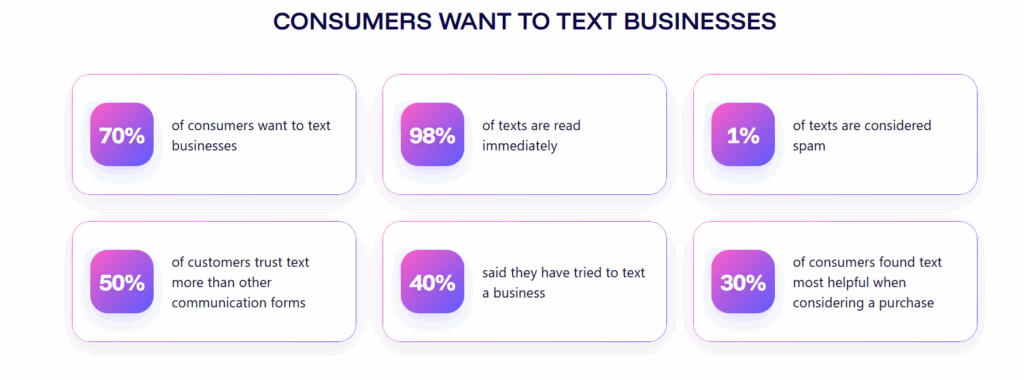
SMS can serve multiple roles within your mobile strategy, from confirming appointments and sending text reminders to following up after purchases or offering seasonal promotions.
It’s also a practical channel for customer service, giving customers a way to ask questions or resolve issues in real time.
Sign up for a free trial or request a demo consultation with Textellent today and see how it can turn texts into growth!
Mobile-Friendly Websites
Your mobile website is often the first place buyers go. If it doesn’t work well on a phone, they’ll most probably leave.
A mobile-friendly site loads fast, fits the screen, and is easy to navigate. It should allow visitors to view product details or fill out a contact form without waiting for support.
Mobile Advertising
The rise in mobile advertising spending shows that brands are investing more in this space.
Mobile ads appear across mobile channels like apps, search engines, and social feeds. Ads can be targeted using user behavior, device type, and location data to increase relevance.
These ads should be visual and connected to a next step, such as calling, texting, or tapping to visit a page. Text message advertising puts your brand in front of the target audience when they’re already searching or browsing.
In-App Marketing
If your business has an app or advertises within mobile apps, you can send in-app messages to engage customers while they’re already active. This includes pop-ups, banners, or special offers that show up inside the app experience.
In-app features like purchase suggestions, loyalty perks, and alerts can also help foster customer loyalty by rewarding repeat engagement.
Push Notifications
Push notifications reach mobile device users who have downloaded your app or opted in through the web. These short messages show up on their lock screen or home screen, even when they’re not using your app.
They work well for updates, alerts, and limited-time offers. Since notifications appear in real time, they help bring buyers back, as long as the messages stay relevant and not too frequent.
Proximity Marketing
Using GPS or proximity tools, you can send location-based messages or ads to buyers based on where they are.
Multi-location marketing works for physical stores, events, or services that are tied to a place. For example, a coffee shop might send a mobile coupon when someone walks nearby.
QR Code Campaigns
QR codes bridge offline and online experiences. You can place a code on a flyer, receipt, or product label that opens a mobile page when scanned.
This makes it easy to collect reviews, drive mobile purchases, or share information with no typing required. As scanning has become a habit for many people, QR codes offer a convenient way to boost engagement.
How to Build an Effective Mobile Marketing Strategy
A strong mobile marketing strategy starts with knowing your customer, your message, and how to deliver it in the simplest way on a phone.
Step #1: Define Your Marketing Goals
Start by studying real behavior. You can look at how your customers interact with your mobile site, how they respond to texts, and what actions they take from social media posts.
For example, a restaurant might use mobile to increase lunchtime orders through texting, while a service provider may focus on reducing missed appointments through SMS reminders.
If your traffic shows heavy mobile usage but low conversion, that’s a sign your mobile experience is not working as it should.
You should focus on removing blockers and improving mobile optimization at the exact moments buyers are most likely to act.
Step #2: Understand Your Audience
A mobile app marketing strategy only works if it reflects how your audience uses their phones. This step helps you learn your audience’s habits, preferences, and challenges.
Start by looking at the customer data you already have. Your mobile site analytics can tell you which devices people use, how long they stay, what pages they visit, and where they drop off.
If most of your traffic comes from smartphones, but bounce rates are high, that’s a signal your mobile experience isn’t working. If users spend time on certain pages but never click through, your messaging may not be matching their needs.
You also need to know where your audience spends their time. Are they active on mobile search? Do they respond to SMS messages or scroll through Instagram and TikTok daily?
Younger buyers may expect fast replies and quick links through DMs or SMS, while others may prefer email marketing or tap-to-call features.
Don’t forget to listen to your existing customers. After a purchase or service, you can send an SMS review request while their experience is still fresh. This feels far more natural than a phone call and helps you foster customer loyalty over time.
Step #3: Create Mobile-Friendly Content
Your content is only as strong as the experience it delivers on a phone. Mobile users scroll quickly on promotional messages, skim headlines, and decide in seconds whether to keep going.
Long blocks of text can overwhelm mobile readers. You have to break your message into smaller sections with headings and spaces between lines.
Also, make sure to use simple language that’s easy to understand at a glance. If you’re sharing key points, highlight them with bold text or a simple structure that’s easy to follow.
Don’t forget about your calls to action (CTAs). On mobile, the next step should always be easy to see and simple to take, whether it’s a “Book Now” button, a short form, or a tap-to-text link.
A layout that prioritizes clarity and structure supports a positive user experience and keeps users engaged.
Step #4: Optimize Mobile User Experience
Smartphone users expect things to work fast, look clean, and be easy to use.
You can start with speed. Mobile users won’t wait for your site to load. You may use tools like Google PageSpeed Insights to test load times, especially on 4G and lower-speed connections.
Your visuals need to load quickly. Use compressed images that don’t slow down the page and avoid large video ads that eat up bandwidth. Make sure buttons are also large enough to tap easily and always lead to a page that’s mobile-friendly.
Menus need to be easy to tap, and important sections like products, services, and contact options should be reachable within one or two steps. Avoid drop-downs that are hard to click or side-scrolling layouts that don’t work well on small mobile screens.
Step #5: Launch and Test Your Strategy
The real value of your mobile marketing efforts comes from testing, measuring, and adjusting based on how potential customers respond.
You need to choose one campaign or product line and release it through your selected marketing channels. If you’re aiming for more bookings, more clicks, or higher engagement, you need to measure how your mobile users respond.
When using SMS for business, you have to measure open rates, response rates, and how many people click through to your page.
If users open your message but don’t act, the offer or timing may need to change. If they click but don’t convert, your landing page may not be mobile-friendly enough.
A/B testing is your best tool here. You can test two versions of a text message, one with a question and one with a direct offer. Try different button placements on your mobile landing page and run the same SMS campaign at two different times of day.
Maximize Mobile Engagement With Every Send—Start Texting With Textellent!
A mobile marketing strategy is only as strong as the tools behind it. Textellent is a mobile marketing solution that provides everything you need to reach buyers through personalized texting.
Textellent goes far beyond basic texting. You can automate follow-ups, send targeted offers, and manage two-way conversations.
Mobile campaigns are easy to launch, performance is easy to track, and results come in fast. It’s everything your mobile strategy needs to stay sharp and responsive.
Looking ahead, the future of mobile marketing belongs to brands that prioritize speed, relevance, and customer-first design.
If you want to stay ahead, your mobile strategy needs to simplify every step for your customers, from the first tap to the final action.
Sign up for a free trial or request a demo consultation with Textellent today!
FAQs About Mobile Marketing Strategy
What is the 3-3-3 rule in marketing?
The 3‑3‑3 rule in marketing is a simple framework that helps ecommerce businesses focus their communication by narrowing it to three key parts.
- Identifying three main messages your audience should remember
- Choosing three primary audience segments to target
- Picking three main distribution channels where those messages are delivered
This rule is useful in conversational SMS marketing, where distractions are constant, and attention spans are short. It reminds you to make your message clear and action-focused.
What are the four marketing strategies?
The four core marketing strategies, called the four Ps of marketing, are:
- Product: What you’re selling and how it meets the customer’s needs
- Price: How do you price your product in a way that reflects its value and market demand
- Place: Where and how the product is sold, including online, mobile apps, and mobile wallet integrations
- Promotion: How you share your message through channels like SMS, social media, and print advertising
In mobile marketing, these strategies still apply. But the focus shifts toward personalization and ease of access through mobile devices. That shift is a big part of what makes mobile marketing important in any modern growth plan.
What are the five Cs of marketing strategy?
The five Cs give structure to analyzing your market and planning your approach:
- Company: What you offer and how you’re positioned in the market
- Customer: Who your target audience is and what mobile experience they expect
- Competitors: What others are doing, especially with rising ecommerce sales
- Collaborators: Technology partners, SMS platforms, and influencers that support your campaigns
- Context: Trends like voice search, location targeting, and growing internet traffic that affect how your strategy performs
These factors help shape a smarter mobile strategy by sending personalized messages that align with customer behavior.
What is the 70-20-10 rule in digital marketing?
The 70-20-10 rule is a content planning method used to balance your efforts:
- 70% of content should be core, reliable content that supports your brand and helps your audience
- 20% should focus on specialized topics, such as marketing materials for promotions or segmented audiences
- 10% is experimental, like experimenting with interstitial ads, mobile formats, or new SMS styles
This model helps you deliver personalized content without losing focus or overwhelming your team. It also supports long-term growth by allowing room to test and learn.

Get Started with Business Texting
Simple to launch, built to scale. Try Textellent FREE for 14 Days
Start Free Trial